
Pakistan ESG Policy Symposium 2026 Convenes National Leadership to Strengthen ESG Policy Implementation and Institutional Reforms in Pakistan
- PESGPS

- May 24
- 4 min read
Updated: May 24
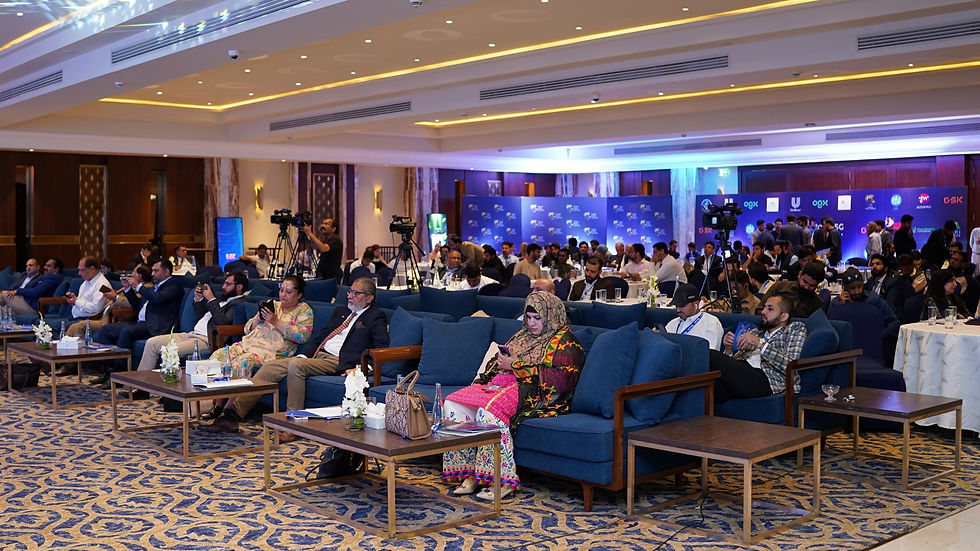
Islamabad, 19 May 2026: The Pakistan ESG Policy Symposium 2026 (PESGPS), organized by the Global Peace Summit, convened senior policymakers, regulators, corporate leaders, government institutions, development partners, and sustainability experts in Islamabad for a comprehensive national dialogue on ESG frameworks implementation and institutional accountability.
The Symposium was inaugurated by Mr. Shaikh Mahmud bin Ilyas, Founder and Chairman of the Global Peace Summit, who emphasized that the global shift toward ESG reflects a deeper redefinition of how progress is understood, where institutions are judged by credibility, transparency, and long-term responsibility. He noted that ESG must not remain a borrowed terminology or fragmented discourse, but must evolve into a coherent national framework that aligns economic growth with environmental resilience, social responsibility, and governance integrity.
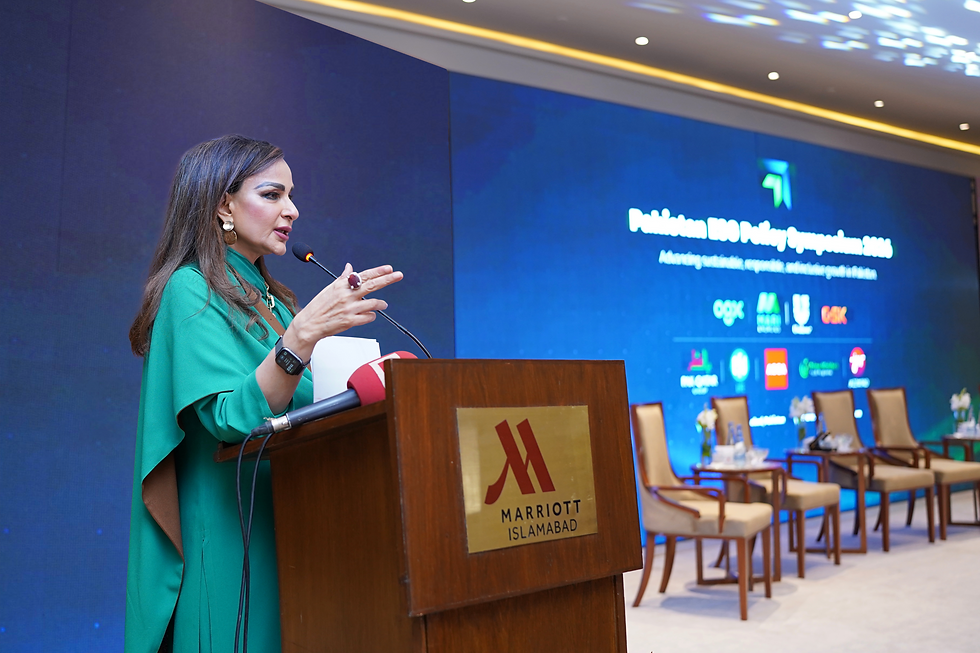
Senator Sherry Rehman, Chairperson Senate Standing Committee on Climate Change, attended the symposium as Chief Guest, along with the Guests of Honor, Mr. Rana Mashhood Ahmed Khan, Chairman, Prime Minister’s Youth Programme, Lt. General Omar Mahmood Hayat (Retd.), Chairman, Pakistan Humanitarian Forum, Ms. Musarat Jabeen, Executive Director, SECP, and Brigadier Aslam Khan (Retd.), President, Rural Development Foundation.
In her address, Senator Sherry Rehman, stated that “the biggest polluters are often filing the biggest ESG reports,” observing that disclosure by itself does not ensure accountability unless it is backed by effective inspection and compliance mechanisms.
The PESGPS advocated for a robust shift toward more substantive ESG adherence, where reporting is aligned with verification and real performance. The Symposium also announced to engage with regulators as to improve and strengthen ESG review frameworks for improved coherence, reliability, and practical effectiveness.

The Symposium featured panel discussions that were led by Ms. Rabia Omar, Partner, Spencer West, Mr. Asad Malik, Head of Public Relations, ACCA Pakistan, Mr. Shehzad Dhedi, CEO, ESG Hexa & Pakistan Partner, Coral, and Barrister Sarah Kazmi, Partner, Energy Resource Management, who moderated deliberations across governance, climate finance, industrial transition, ESG disclosure frameworks, and regulatory alignment.
Representatives from leading organizations across the corporate, financial, development, and sustainability sectors shared their key insights and recommendations, bringing diverse experience and in-dpeth perspective to the discussions. These included representatives from GSK Pakistan, Unilever Pakistan, Oil & Gas Development Company Limited (OGDC), EFU Life Assurance, Jazz-World, Sindh Engro Coal Mining Company, Pak-Qatar Takaful, SGS Pakistan, ACCA Pakistan, Crowe Pakistan, World Agriculture Forum, Tresmark, Arabian Sea Center for Development, and TM Resources, . The Symposium also included participation from key institutional and corporate stakeholders representing the Mari Energies, Fauji Foundation, Engro Corporation, Sui Southern Gas Company, National Foods, Total PARCO, and others.
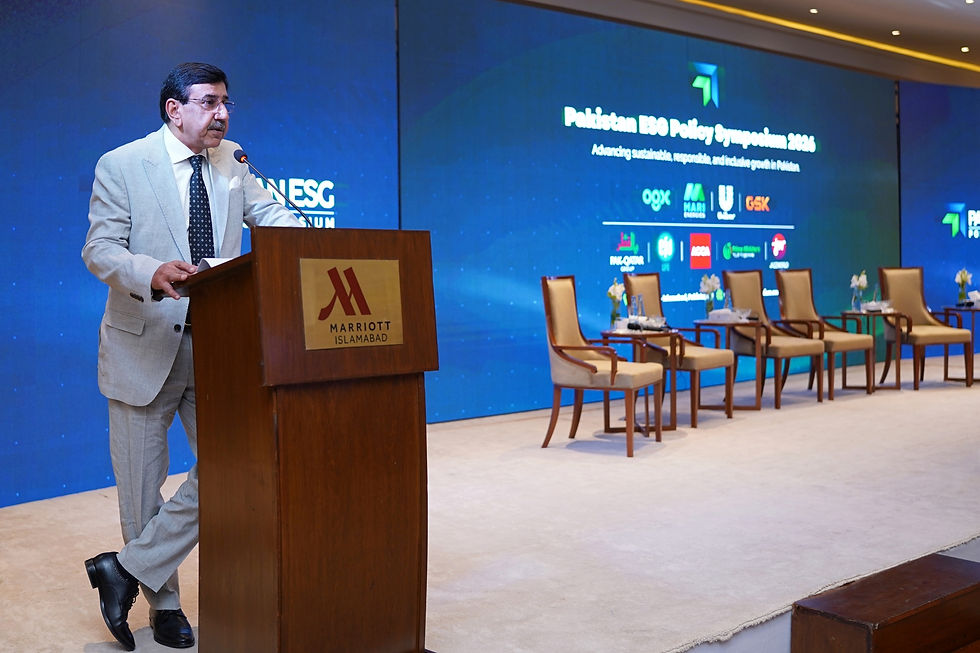
In his address, Lt General Omar Hayat (Retd) noted that Pakistan’s sovereign risk, export competitiveness, and access to global supply chains are now inseparable from ESG performance. He cautioned that while Pakistan has talent and resources, the real challenge lies in coherence: integrating governance and accountability into a unified national ESG compact.
Drawing on his institutional leadership experience, he reminded that “good intentions do not build strong institutions, clear structures, accountability, and governance do.” He emphasized that ESG must be treated as governance, not CSR or philanthropy, with board ownership, empowered sustainability committees, and executive accountability at its core.
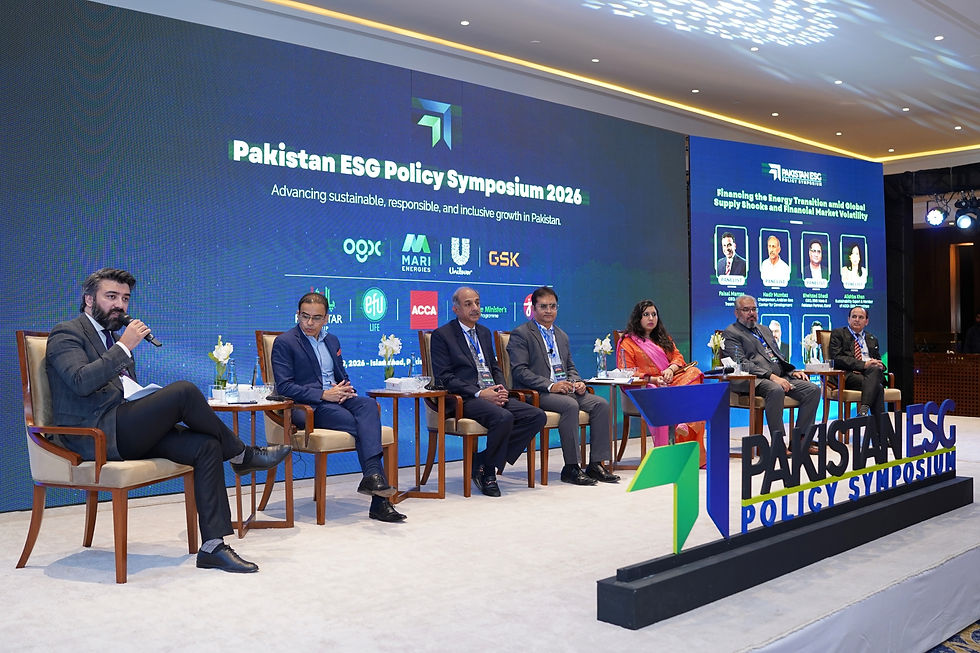
During the panel discussions, speakers emphasized that ESG in Pakistan must advance from voluntary positioning toward a structured and enforceable framework grounded in measurable standards and institutional accountability. Discussions focused on climate risk, industrial transition, responsible investment, governance reforms, and the growing importance of ESG compliance within international trade and financial systems.
Senator Sherry Rehman called for a rules-based and enforceable ESG framework in Pakistan, stressing that sustainability obligations must be measurable, transparent, and subject to institutional oversight.
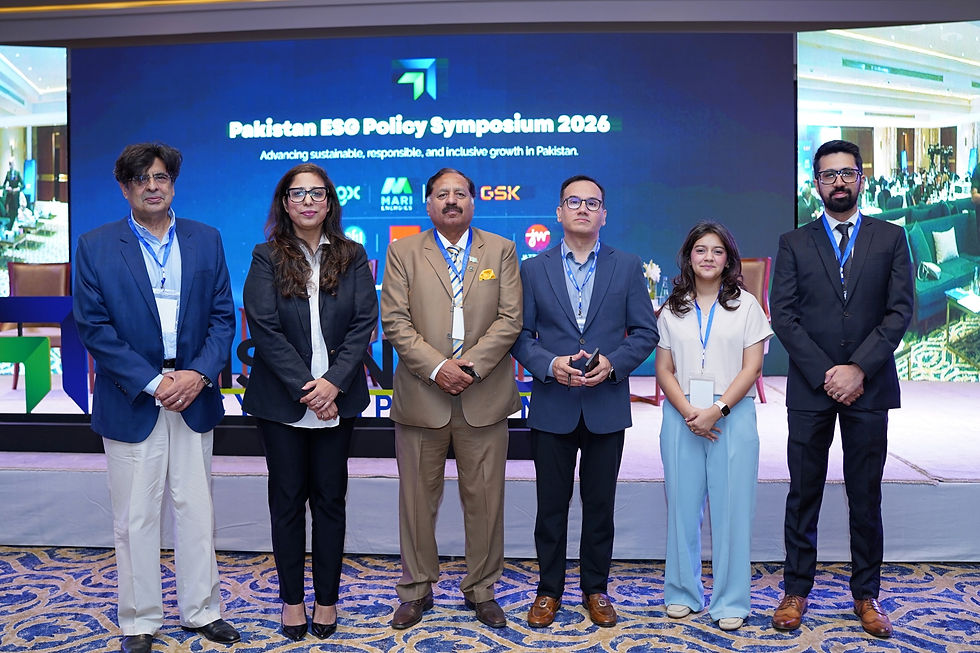
Participants from the corporate sectors highlighted the need for ESG adoption pathways that balance industrial growth, investment competitiveness, and sustainability obligations, as global regulatory frameworks continue to evolve. Several speakers noted that Pakistan’s future economic resilience will increasingly depend on responsible corporate conduct, climate preparedness, and internationally aligned reporting mechanisms.
A key outcome of the Symposium was the release of the Pakistan ESG Policy Report 2026–27. In her address, Senator Sherry Rehman encouraged the launch of the Report as an important milestone in the country’s evolving sustainability journey, noting that a more defined regulatory direction is now beginning to take shape. It will consolidate recommendations from the Symposium and serve as a policy-facing document for engagement with government ministries, regulatory institutions, financial authorities, and national decision-making bodies.
The Symposium concluded with a call to establish a National Committee on ESG Frameworks and a shared consensus that Pakistan’s realignment toward sustainable and globally competitive economic systems will require coordinated engagement between the state, regulators, industry, financial institutions, and development partners, supported by credible standards and deployment mechanisms.
Comments